
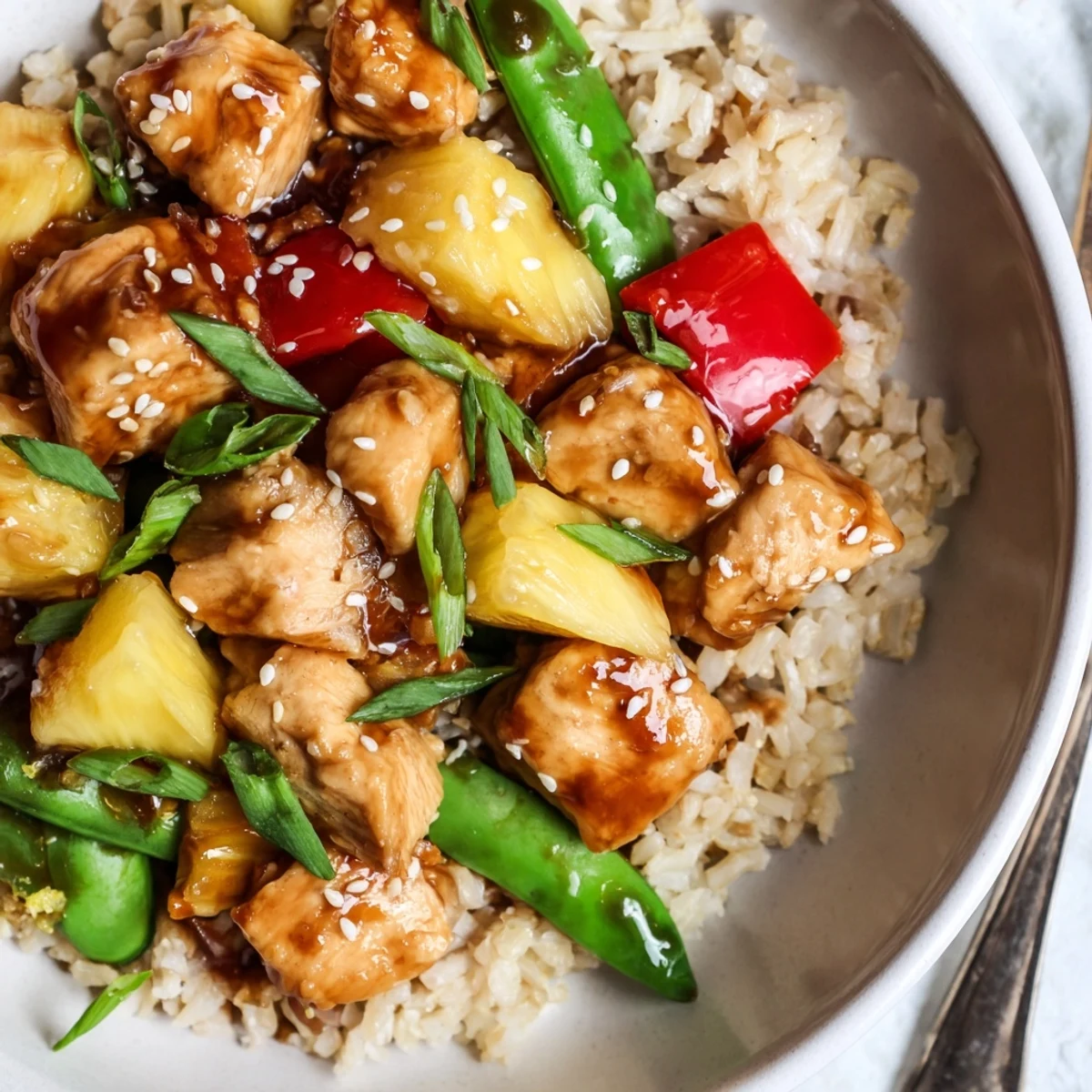
 Save to Pinterest
 Cut chicken into bite-sized pieces and sear until golden. Stir-fry garlic, ginger and colorful vegetables, then return the chicken with diced pineapple and sliced green onions. Pour a whisked sauce of soy, pineapple juice, rice vinegar, honey and cornstarch; simmer until glossy. Fold in day-old jasmine rice and heat through. Serve hot with extra scallions or sesame seeds; swap tamari for gluten-free or add chili for heat.
The sizzle of chicken hitting a screaming hot wok on a Tuesday evening is one of those sounds that instantly makes the kitchen feel alive, and this pineapple chicken and rice delivers that energy in spades along with a glossy, sweet and savory sauce that clings to every grain of rice.
One rainy Thursday I threw this together with leftover takeout rice and a half eaten pineapple sitting on the counter, and my roommate walked in, grabbed a fork, and refused to wait for plates.
Ingredients
- Boneless skinless chicken breast (1 lb, cut into bite sized pieces): Uniform pieces ensure everything cooks evenly so you avoid the dreaded mix of rubbery and raw.
- Fresh pineapple, diced (1 cup): Fresh pineapple holds its texture better than canned, but canned works fine if you drain it well and save the juice for the sauce.
- Red bell pepper, chopped (1): The sweetness of red bell pepper echoes the pineapple and adds a satisfying crunch that contrasts the soft rice.
- Sugar snap peas, trimmed (1 cup): These bring a bright, grassy snap that keeps the dish feeling fresh rather than heavy.
- Green onions, sliced (3): Reserve a handful for garnish because the sharp, oniony bite raw on top balances the richness of the sauce.
- Garlic, minced (2 cloves): Fresh garlic makes a noticeable difference here since there are so few aromatics driving the flavor base.
- Fresh ginger, grated (1 inch piece): Ginger adds warmth and a subtle heat that ties the tropical and Asian inspired elements together beautifully.
- Day old jasmine or basmati rice (2 cups cooked): Day old rice is drier and fries up fluffy instead of turning into a gummy clump.
- Soy sauce (1/4 cup, or tamari for gluten free): This is the salty backbone of the sauce, so use one you genuinely enjoy the taste of on its own.
- Pineapple juice (2 tbsp): If you are using fresh pineapple, press a few chunks through a fine strainer to extract enough juice for the sauce.
- Rice vinegar (1 tbsp): A small splash of acidity lifts the whole dish and prevents the sweetness from becoming cloying.
- Honey or brown sugar (1 tbsp): Honey dissolves faster and gives a floral sweetness, while brown sugar adds a deeper, molasses tinged note.
- Sesame oil (1 tsp): Just a teaspoon finishes the sauce with a nutty, toasted aroma that makes the dish taste restaurant quality.
- Cornstarch (1 tsp): This tiny amount thickens the sauce just enough to coat the chicken and rice without turning it gelatinous.
- Vegetable oil (2 tbsp): A neutral oil with a high smoke point keeps the chicken and vegetables searing instead of steaming.
- Salt and black pepper: Season the chicken before searing so every piece is flavorful from the outside in.
Instructions
- Whisk the sauce together:
- In a small bowl, combine the soy sauce, pineapple juice, rice vinegar, honey, sesame oil, and cornstarch, whisking until the cornstarch disappears completely with no lumps hiding at the bottom. Set it near the stove so it is ready to pour the moment you need it.
- Sear the chicken:
- Heat 1 tablespoon of vegetable oil in a large skillet or wok over medium high heat until the oil shimmers and just begins to smoke. Add the chicken pieces in a single layer, season with salt and pepper, and let them sit undisturbed for a minute so a golden crust forms before stirring, cooking 5 to 6 minutes total until no longer pink inside. Transfer to a plate and resist the urge to sneak too many pieces.
- Build the vegetable base:
- Add the remaining tablespoon of oil to the same pan, then toss in the garlic and ginger, stirring constantly for about 30 seconds until your kitchen smells incredible. Add the bell pepper and sugar snap peas, stir frying for 3 to 4 minutes until the peppers soften slightly but still have a bite.
- Bring it all together:
- Return the chicken to the pan along with any juices from the plate, then add the diced pineapple and sliced green onions, tossing everything so the flavors start mingling. Pour in the sauce and stir continuously for 2 to 3 minutes as it bubbles and thickens into a glossy glaze that coats each piece evenly.
- Fold in the rice:
- Add the cooked rice to the pan, using a spatula to gently fold and toss until every grain is stained with sauce and heated through, about 2 minutes. Taste a spoonful right from the pan and adjust with a pinch more salt or a squeeze of lime if it needs brightness.
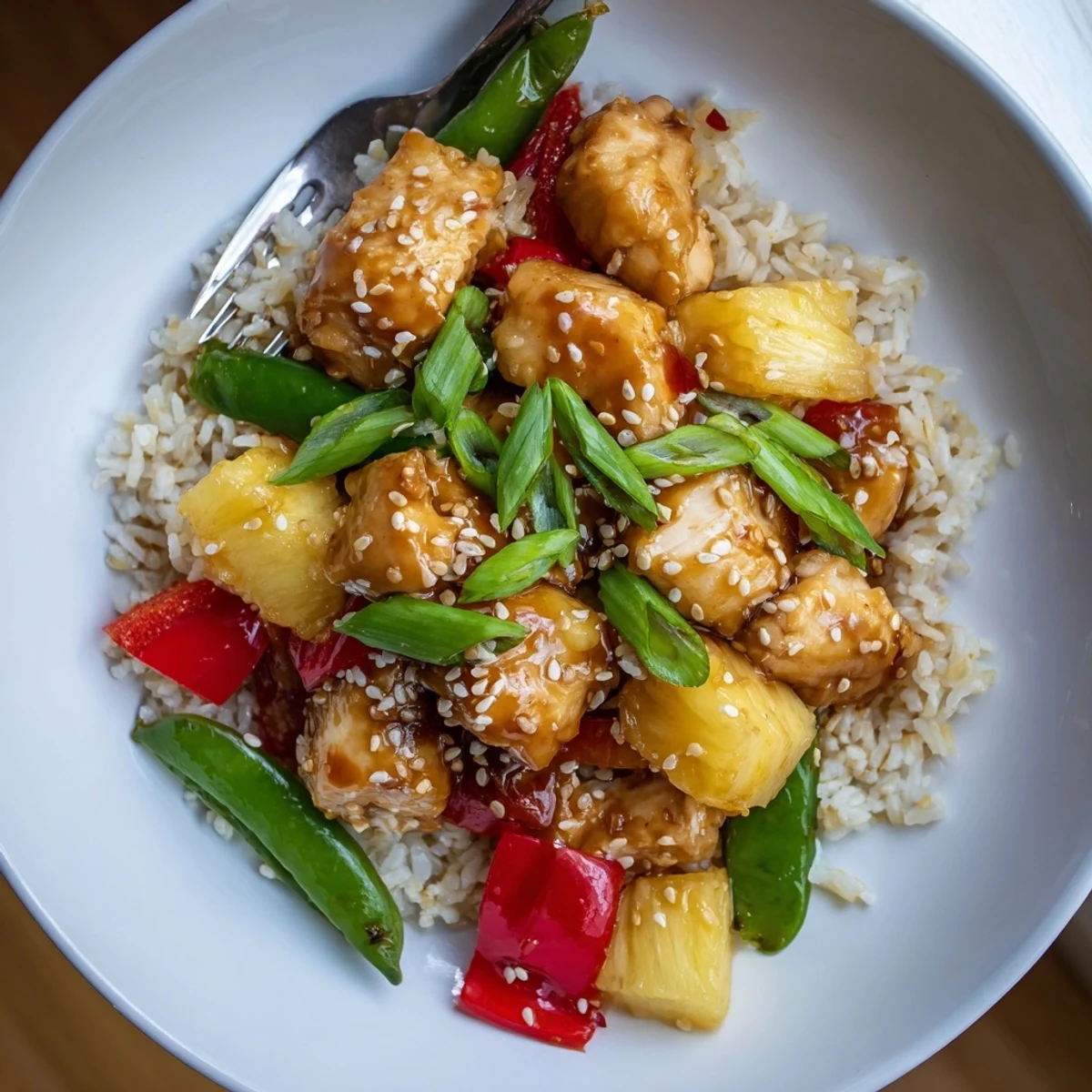 Save to Pinterest
 Somewhere between the sticky fingers and the second helpings, this dish stopped being just a weeknight shortcut and became the meal my friends started requesting by name.
Making It Your Own
Sliced chili or half a teaspoon of chili flakes tossed in with the garlic transforms the sweetness into something more complex and keeps each bite surprising.
Swapping the Protein
Extra firm tofu, pressed and cubed, absorbs the sauce beautifully and gets crisp edges in the same amount of time if you want a vegetarian version.
What to Serve Alongside
A cold pineapple infused drink or a crisp glass of Riesling cuts through the richness and makes the whole meal feel like a tiny vacation.
- Day old rice is the real secret, so always cook a little extra the night before.
- Toasted sesame seeds sprinkled on top add a finishing crunch that elevates the presentation.
- Taste the sauce before adding it to the pan and adjust the honey or vinegar to match your preference.
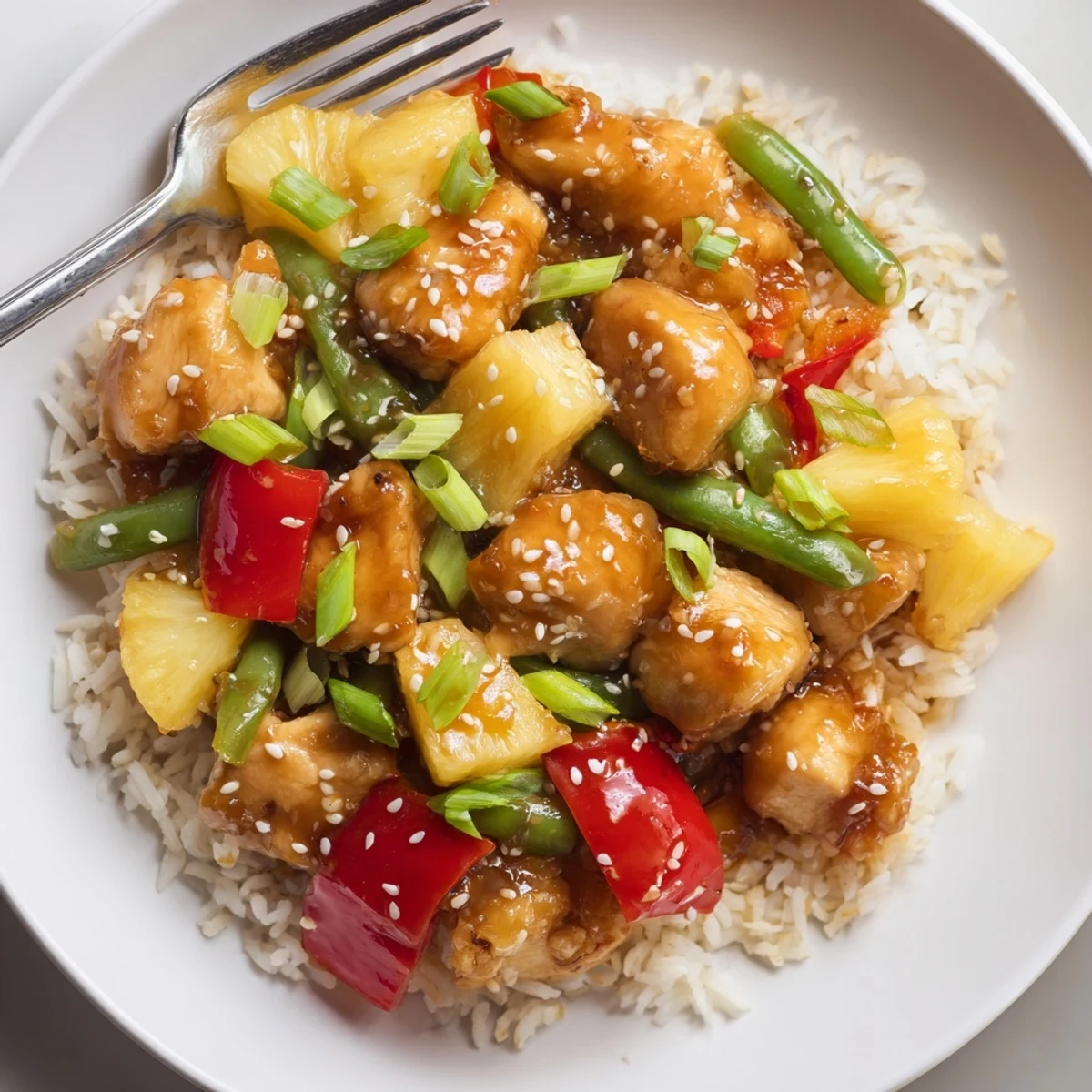 Save to Pinterest
 Keep the leftovers in an airtight container and reheat them in a skillet the next day when the flavors have had time to deepen and marry. That lunch will taste even better than dinner did.
Recipe FAQs
- → Can I use canned pineapple instead of fresh?
-
Yes. Drain canned pineapple well and reserve a little juice for the sauce if needed. Fresh gives brighter texture, but canned works fine—just adjust sweetness if the fruit is in syrup.
- → How do I prevent mushy rice?
-
Use day-old, chilled rice so grains separate easily. If using freshly cooked rice, spread it on a tray to cool and dry slightly before tossing into the pan over high heat.
- → What's the best way to thicken the sauce?
-
Whisk cornstarch into the sauce liquid before adding to the pan, then simmer briefly; the heat will turn it glossy and cling to the chicken and vegetables.
- → Can I swap the chicken for another protein?
-
Yes—firm tofu, shrimp, or pork work well. Cook the substitute fully and use the same method, adjusting cook times: tofu golden, shrimp just until opaque.
- → How can I make this gluten-free?
-
Replace soy sauce with tamari or a certified gluten-free soy alternative and double-check labels on sesame oil and other packaged ingredients.
- → Which rice is best for this dish?
-
Jasmine or basmati are ideal for their fragrance and texture. Cook ahead and chill so the grains stay separate during the final stir and toss.
